


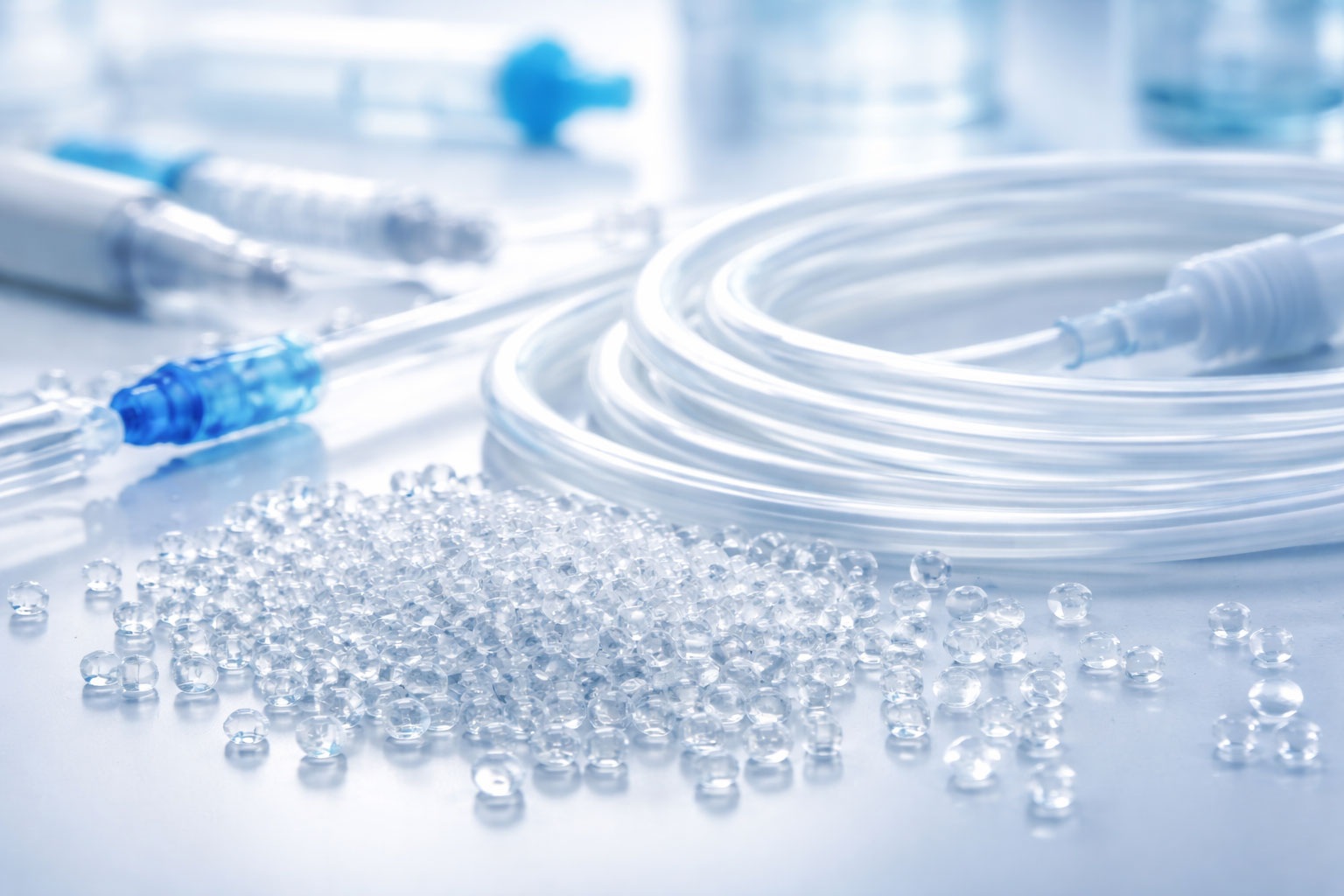
TPU: The Future of Medical-Grade Raw Materials
In recent years, Thermoplastic Polyurethane (TPU) has emerged as one of the most promising materials in the medical industry. Thanks to its unique combination of flexibility, durability, and biocompatibility, TPU is increasingly being adopted in the manufacturing of medical devices and healthcare products. As the demand for safer, more reliable, and more versatile medical materials continues to grow, TPU is becoming a key component in the next generation of medical technologies.
Exceptional Mechanical Performance
One of the main advantages of TPU is its excellent mechanical performance. TPU combines the elasticity of rubber with the strength and durability of engineering plastics. This unique balance allows manufacturers to produce medical components that are both flexible and resistant to wear, tear, and repeated use.
In medical environments where reliability is critical, TPU provides outstanding resistance to abrasion, pressure, and deformation. These properties make it particularly suitable for products that require long-term durability and consistent performance.
Biocompatibility and Patient Safety
Patient safety is a fundamental requirement in medical device manufacturing. TPU materials can be engineered to meet strict biocompatibility standards, making them suitable for direct or indirect contact with the human body.
Many medical-grade TPU formulations comply with international regulatory standards and are widely used in healthcare applications where material purity and safety are essential. The material’s stability and chemical resistance also reduce the risk of degradation when exposed to bodily fluids or sterilization processes.
Versatility in Medical Applications
TPU is an extremely versatile material that can be processed using various manufacturing techniques such as extrusion, injection molding, and blow molding. This flexibility allows manufacturers to create complex shapes and highly specialized components.
As a result, TPU is used in a wide range of medical products, including:
-
Medical tubing
-
Catheters
-
Infusion systems
-
Respiratory equipment components
-
Protective medical covers and membranes
-
Flexible connectors and seals
Its ability to combine softness with structural strength makes TPU ideal for devices that must perform reliably while maintaining patient comfort.
Compatibility with Modern Manufacturing Technologies
Another important advantage of TPU is its compatibility with modern manufacturing technologies. TPU can be precisely processed using advanced production techniques, enabling manufacturers to maintain tight tolerances and high product consistency.
In addition, TPU supports the development of innovative medical devices by allowing engineers to design components that were previously difficult to produce with traditional materials.
Sustainability and Future Development
Beyond its mechanical and clinical advantages, TPU also offers benefits in terms of sustainability. As a thermoplastic material, TPU can be reprocessed and recycled more easily than many traditional medical polymers. This characteristic aligns with the growing effort within the healthcare industry to reduce environmental impact while maintaining strict safety standards.
With continuous advancements in polymer science, new TPU formulations are being developed to further improve performance, sterilization resistance, and long-term stability.
Conclusion
As the medical industry continues to evolve, the demand for advanced materials that combine safety, durability, and adaptability is increasing. TPU stands out as a material capable of meeting these requirements while enabling the development of innovative medical devices.
Thanks to its mechanical strength, biocompatibility, versatility, and compatibility with modern manufacturing processes, TPU is widely regarded as a key raw material for the future of medical product manufacturing.